Digesting Our Childhood: Healing Our Relationship to Food with Somatic Therapy
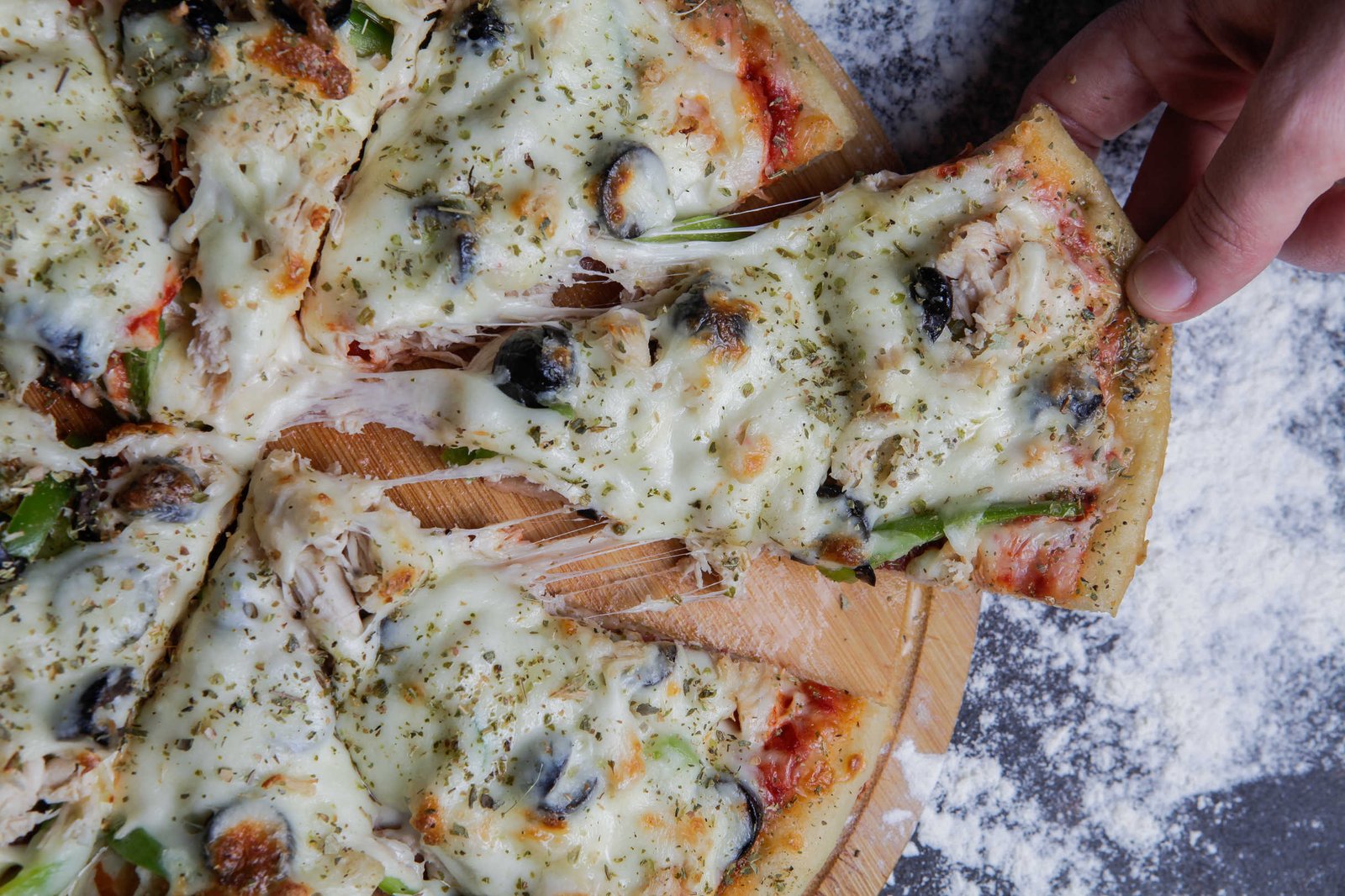
It’s the holiday season. My newborn is barely a month old, I’m getting home from my first week back at work. I am exhausted, but I’m responsible for dinner, so I throw a frozen pizza in the oven and make a salad. I accidentally bought a pizza that had meat. My wife is vegetarian, so I’m the only one who can eat it. I tell myself I’ll have a couple slices, but instead I finish the whole thing. Afterward, I feel immediately awful and the sense of shame spreads out to my wife, myself, and maybe my baby. In that moment, I lost all connection to my history with food and how this pattern keeps repeating.
This experience was a reminder of how enactments (repetitive emotional or relational patterns from our past that play out in real time without our awareness) show up around food. I know I am not alone in this. Food is one of the most deeply ingrained places where we reenact protective strategies. Somatic psychotherapy helps us meet these moments by becoming the nourishing presence we once needed.
Early Feeding: The Emotional Backdrop of Eating
Our first experiences with food are not about calories or if food is healthy. It is about relationship and our inner sense of being cared for, responded to, and nourished.
A baby’s feeding happens inside an emotional scene: the caregiver’s face, tone of voice, body tension, eye contact, availability, and the environment in general are all significant parts of the backdrop. Our early feeding interactions and how attuned caregivers were shape how children later develop psychologically (Grochowska and Kmita, 2025). This influences how we later develop our emotional relationship to food and regulation.
-
If feeding was generally warm, consistent, and responsive, the body can internalize:
“When I’m hungry, someone comes. I’m allowed to receive. I’m safe. I’m not alone.” -
If feeding happened while a caregiver was overwhelmed, depressed, distracted, or under-resourced, the body can internalize:
“Hunger is stressful. Getting my needs met feels unpredictable. I have to adapt in order to feel safe.”
It’s important to note that many factors play into how capable caregivers are of responding. No one is individually to blame. Postpartum stress, financial pressure, health issues, and relationship conflict all affect how present a caregiver can be. Gaining insight and clarity into how our early experiences created the foundation for our regulation and nervous systems gives us knowledge on how we can begin to heal it today.
The Enactment of Eating: The Roots of Symptoms
Food and how we eat often becomes a protective strategy on two ends of a spectrum depending on the emotional context we developed within: either pushing feelings down as overeating OR cutting needs off through restriction. These same early patterns often shape how we feel about our bodies as well. Body image struggles and dysphoria frequently grow out of the same attachment wounds that influence emotional eating.
Overeating as Pushing Things Down
Overeating often develops in environments where the basics were provided but emotional nourishment was inconsistent or absent. For myself, I had to normalize a very chaotic background where supportive figures were present but constantly changing. From this, many of us internalize a feeling of being unworthy of nourishment.
If you grew up around conflict, criticism, or chaos, you may have learned early on to push your reactions down to stay safe. Somatically, overeating is the body saying: “There’s too much here. I can’t feel all of this. I need to push it down.” Food becomes a way to blunt emotional intensity when expression was never safe.
Common ways we reenact early avoidance:
-
Eating quickly, barely tasting anything
-
Eating during stress or after a hard day
-
Numbing out while eating (watching videos or scrolling)
-
Dissociative eating or brief relief followed by shame
Restriction as Repeating Neglect
Restriction is the other end of the same story. If you grew up unseen or emotionally neglected, you may have internalized the belief that your needs are inconvenient or unimportant. Many people who restrict also struggle to feel or name their emotions. The lack of attunement creates a backdrop that makes nourishment unavailable.
From a somatic lens, restriction becomes: “If no one fed me, I won’t feed me either.” It’s a reenactment of emotional undernourishment, turned inward.
Common ways restriction reenacts early neglect:
-
Ignoring or overriding hunger cues
-
Feeling disgust or guilt when eating
-
Feeling normal and in control when denying nourishment
How Somatic Body Image Therapy in Seattle Can Help
As I shared in the beginning, my own journey with food and how stress affects me is an ongoing issue. I was reminded in my own therapy work that I already knew the origins of this. Honestly, in that moment I had no idea what he meant. It was not until I slowed down and checked in that my early history came flooding up as a reminder of what I want to push down when I’m having difficult emotions.
Likewise, in my own private therapy practice we don’t focus on food rules or willpower, which more often than not activate our guilt. Instead, we explore what your eating patterns are trying to protect and how your body learned to cope with overwhelm, loneliness, or emotional neglect.
Together, we work on:
- Tracking sensations: noticing hunger, fullness, and emotional activation as separate signals.
- Building capacity to feel: staying present with difficult emotions without turning to food or restriction.
- Updating old narratives: shifting from self-criticism to a more compassionate, nourishing internal relationship.
- Integrating talk therapy with body-based work: helping your system learn that it’s safe to feel and safe to receive nourishment.
If you see yourself in patterns of overeating, restricting, or swinging between the two, you may think of this as simply a behavior you need to change. I invite you to reconsider that perspective and instead recognize your body is repeating something it learned a long time ago. Somatic therapy helps you create more choice, have less compulsion, and gain deeper clarity around food.
You Might Try This Instead
Another invitation I’ll extend is something I’m trying to do myself. You can join me! At the next meal or snack you have, get comfortable, feel how you are feeling in the moment, eat slower, and notice what you feel as you eat. Do you feel calm or rushed? Is what you are eating satisfying or are you needing more? When you are finished, how do you feel? Build curiosity with your relationship to food, and you might start to notice aspects of yourself that have been tied to food for a long time.
—
If you’re ready to begin this work, you’re welcome to Contact Me for a session in Seattle, or online throughout Washington and California.